I’ve been doing this long enough to see the same thing every April. A student walks in ten days before the SAT and says they want to take four more practice tests back to back. They’ve got it all planned out.
I tell them to scale it back.
Take one practice test this weekend. Sit for it under real conditions: timed, no phone, no breaks you wouldn’t get on test day. The digital SAT is about two hours and fifteen minutes. You can do that on a Saturday morning and still have the rest of your weekend.
The part that actually matters is what you do after. Go through every wrong answer and sort them, not by topic, but by what went wrong. Was it a misread? A concept you didn’t know? A question you ran out of time on? A student who misses five math questions and says “I’m bad at math” hasn’t figured out anything useful yet. Maybe three of those were careless misreads and one was pacing. Those need completely different fixes.
That one test is your diagnosis for the rest of the week. After that, you’re done with full-length practice. The remaining days are timed sections and drilling.
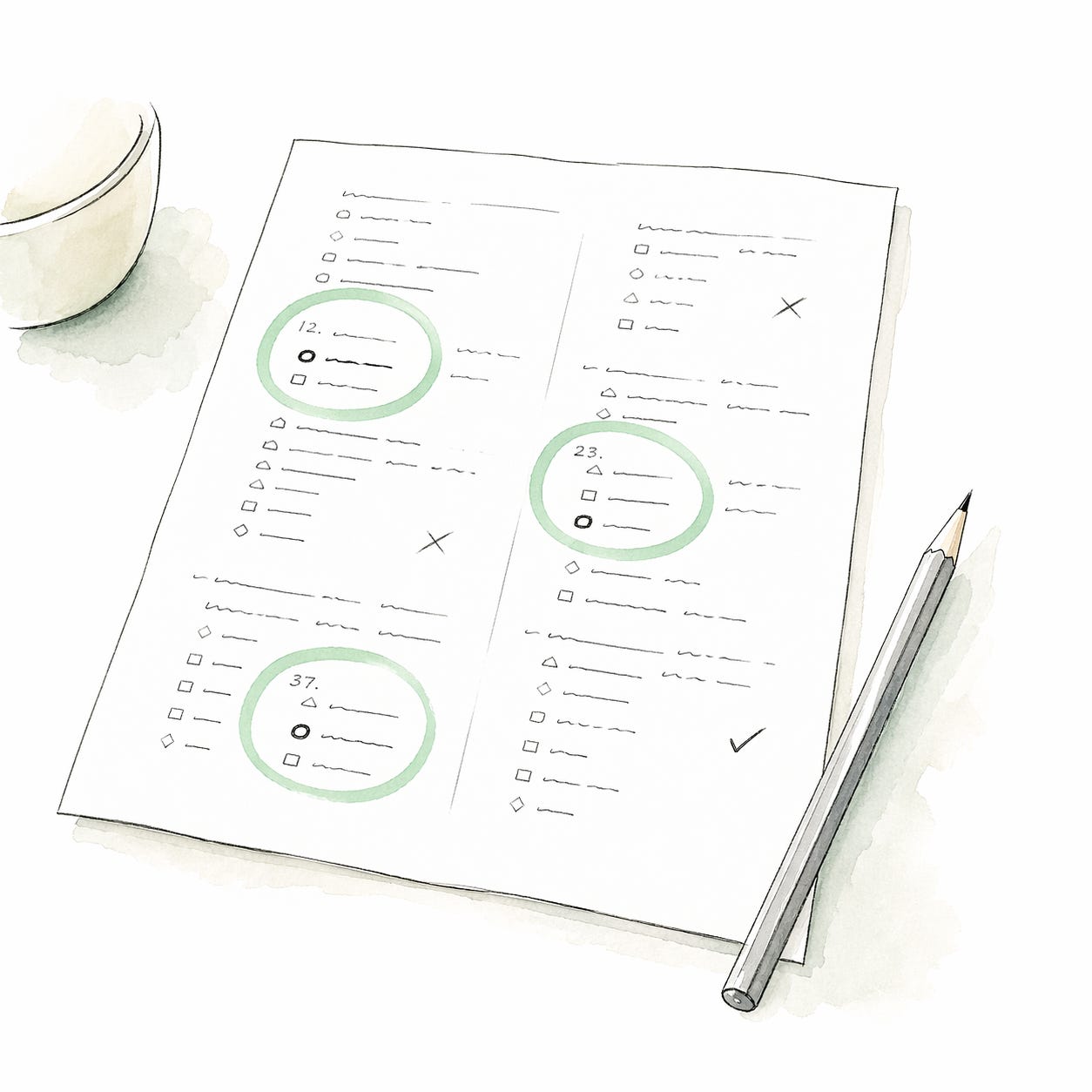
Take your top three mistake patterns and drill them. Use College Board’s question bank to filter by topic. Do sets of 15-20 questions at a time, timed. Review every wrong answer before moving to the next set.
Most students want to study everything in the last week. But if you’re getting 85% of questions right and missing the same three types over and over, the fastest way to raise your score is to fix those three types. Not to re-review material you already know.
The thing families forget about until it’s too late is logistics.
Figure out the morning now. What time does the student need to leave? What are they eating for breakfast? Do they have their ID, their calculator, a snack for the break? Is their laptop charged? Do they know where the test center is, and have they actually been there before?
I had a student two years ago who showed up to the wrong test center. By the time his mother drove him to the right one, he was twenty minutes late and completely rattled. His score was forty points below his practice average. All of that was avoidable with ten minutes of planning on a weekday afternoon.
I put together a day-by-day guide that maps out the last eight days: what to study each day, what to skip, and how to spend the night before and the morning of. If you want it, you can download it here.
One diagnostic practice test, then targeted work on weak spots for the rest of the week. Your student already knows more than they think. The job right now is to stop trying to cover everything and fix the specific things that are costing them points.
If your child is taking the SAT on May 2nd and you want to talk through a plan for the las
This piece first appeared on our Substack. Read it there or subscribe to get new essays on testing, admissions, and learning in your inbox.