February is when it all lands.
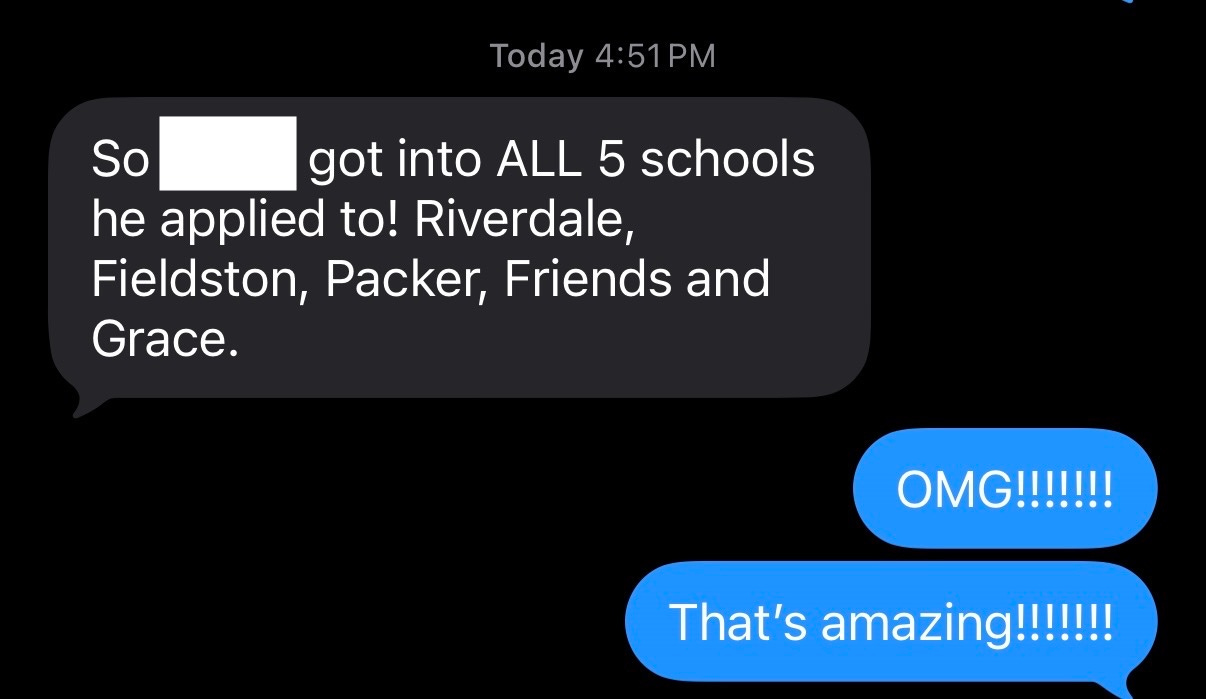
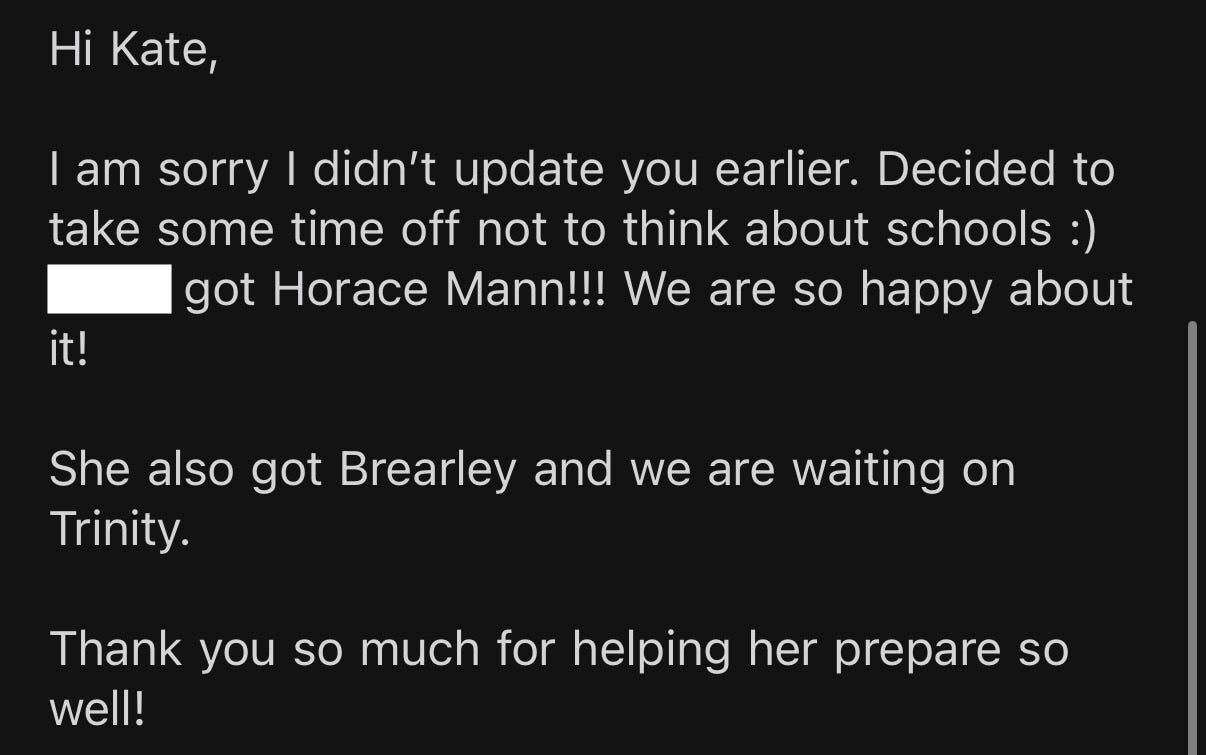
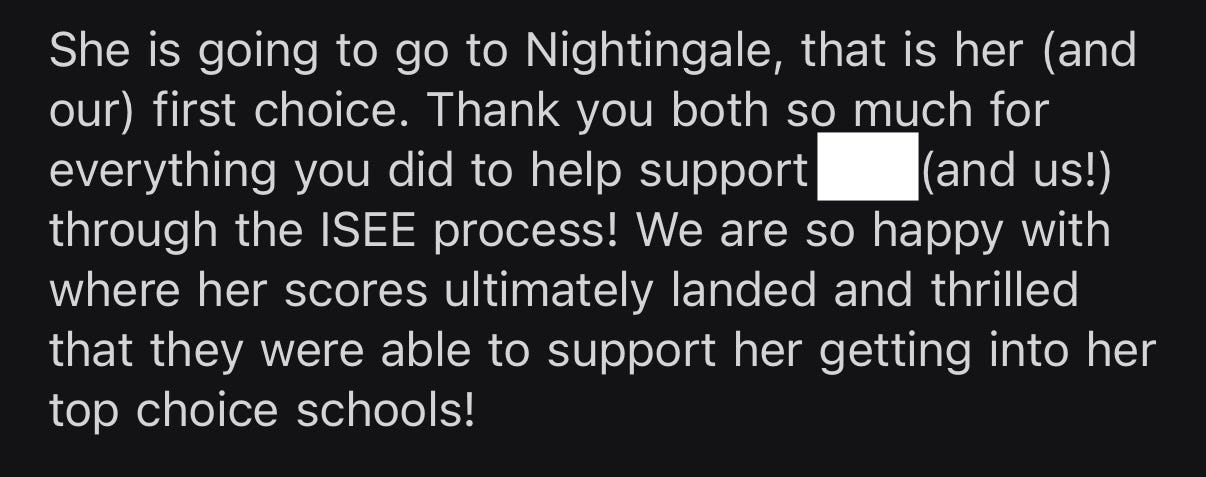
The texts and emails start coming in on a Friday afternoon and they don’t really stop until the weekend. A parent you’ve been in touch with since last spring, someone you’ve talked through test dates and score reports and “is this school realistic?” conversations with, sends you three words: She got in.
This February brought results across the board for KFT families. Middle school and high school both. And while I want to celebrate the outcomes, what I keep coming back to is the work that made them possible. So I want to talk about that for a second.
The ISEE is a genuinely hard test. At every level.
The Middle Level ISEE asks 5th graders to reason through math and verbal problems that are designed to be unfamiliar. The Upper Level asks the same of 8th graders, except now we’re talking Algebra II concepts, quantitative comparisons, and a vocabulary section that assumes reading habits most kids just don’t have anymore.
This is not a test you can muscle through on smarts alone. It rewards students who have been taught how to approach it. And that’s actually what makes this prep interesting to me: you’re not just teaching to a test. You’re introducing content ahead of schedule. You’re building study habits and executive functioning skills that are going to matter starting day one at a new school. You’re showing a kid what it feels like to work hard at something that doesn’t come easily, which for a lot of high-achieving students is a new experience.
The students who go through this process often arrive better prepared than peers who have been at the same school since kindergarten. Less shocked by hard. More equipped to manage their own learning.
And one of my favorite parts of this job: they come back two years later for SAT and ACT prep. I already know how they learn. I’ve watched them grow. That continuity is something I don’t take for granted.
This season, I got to watch a whole team do this work.
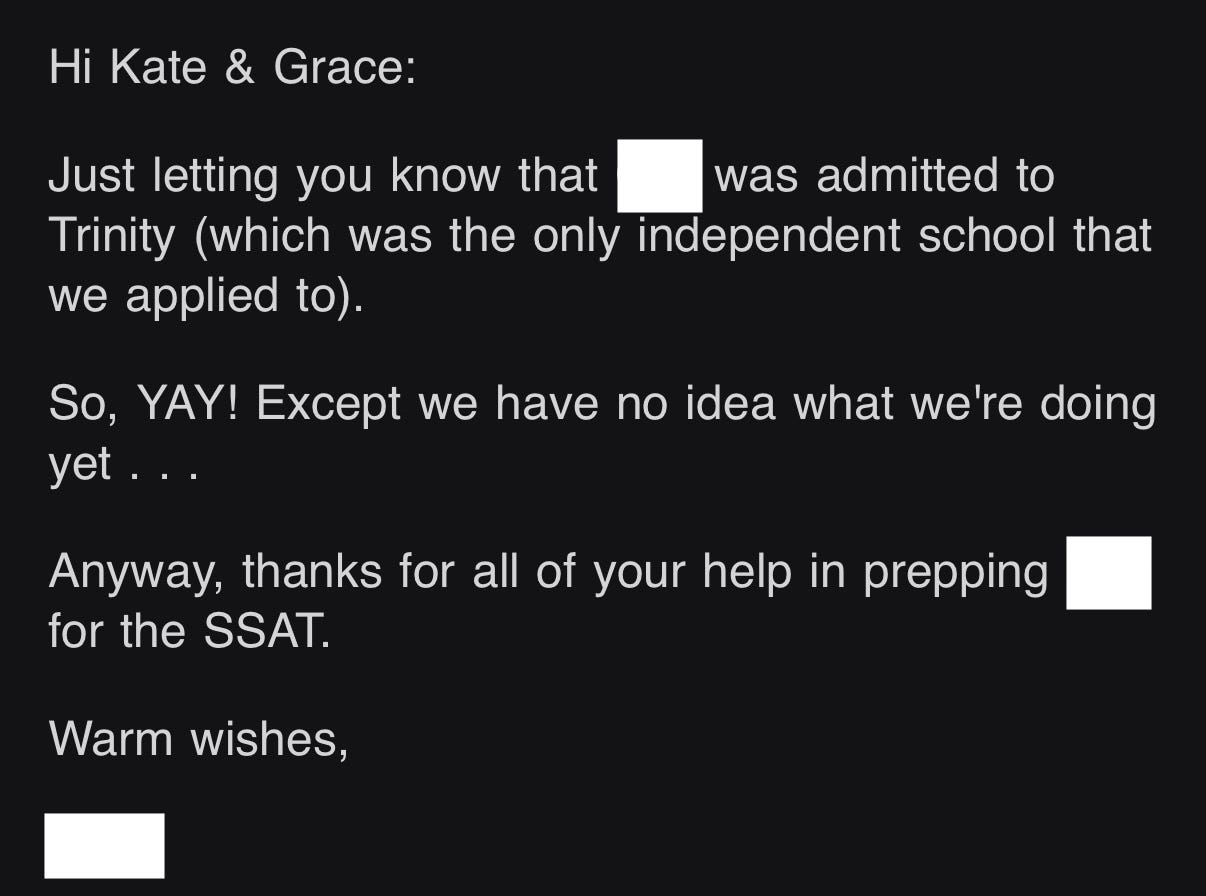
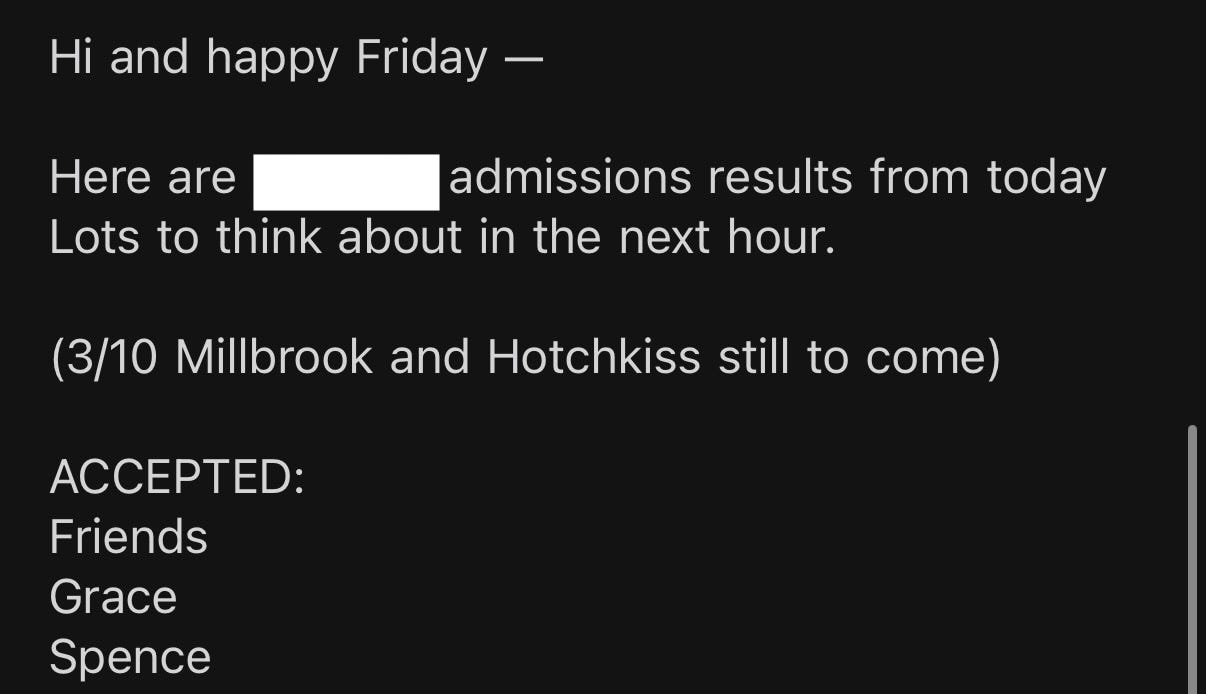
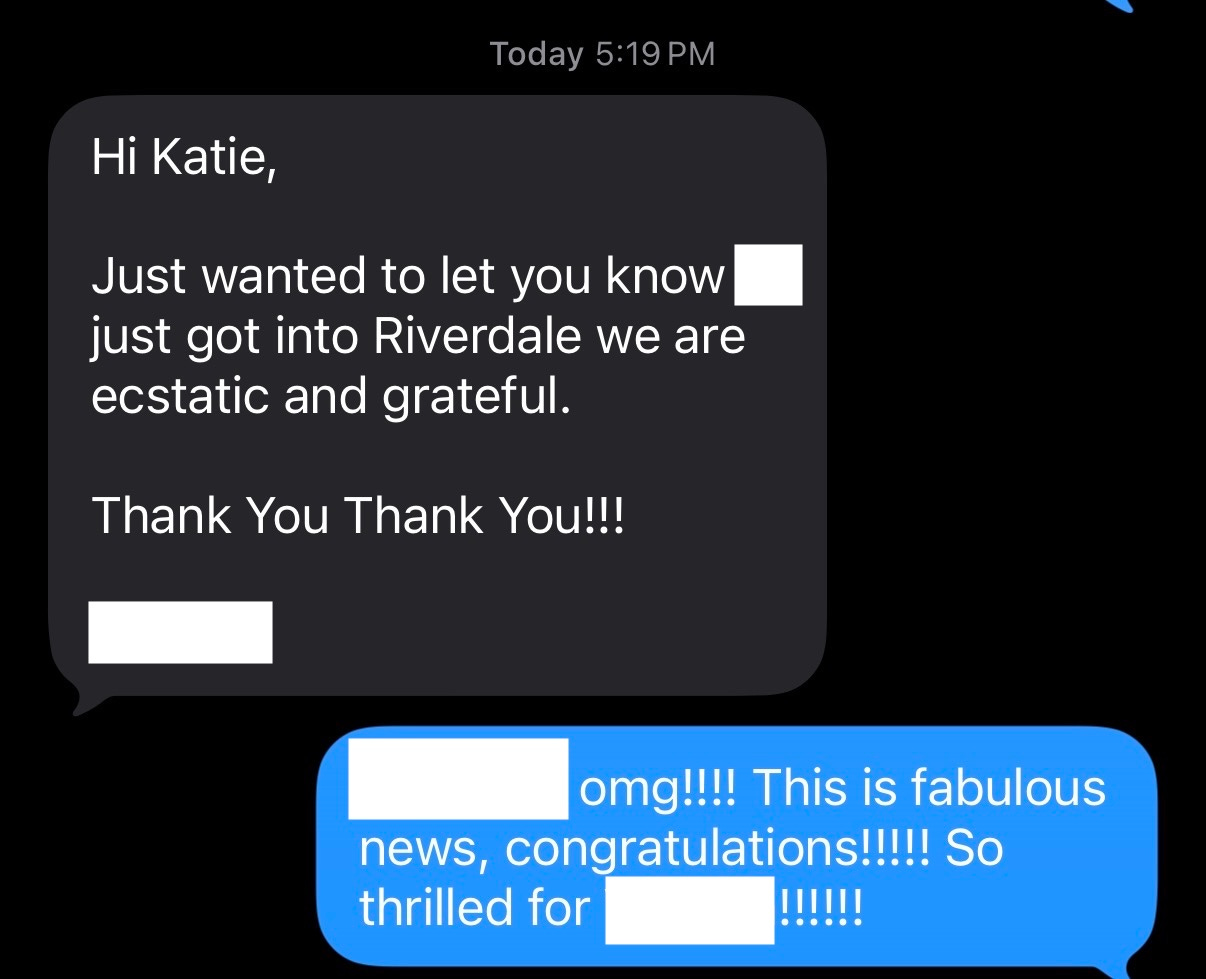

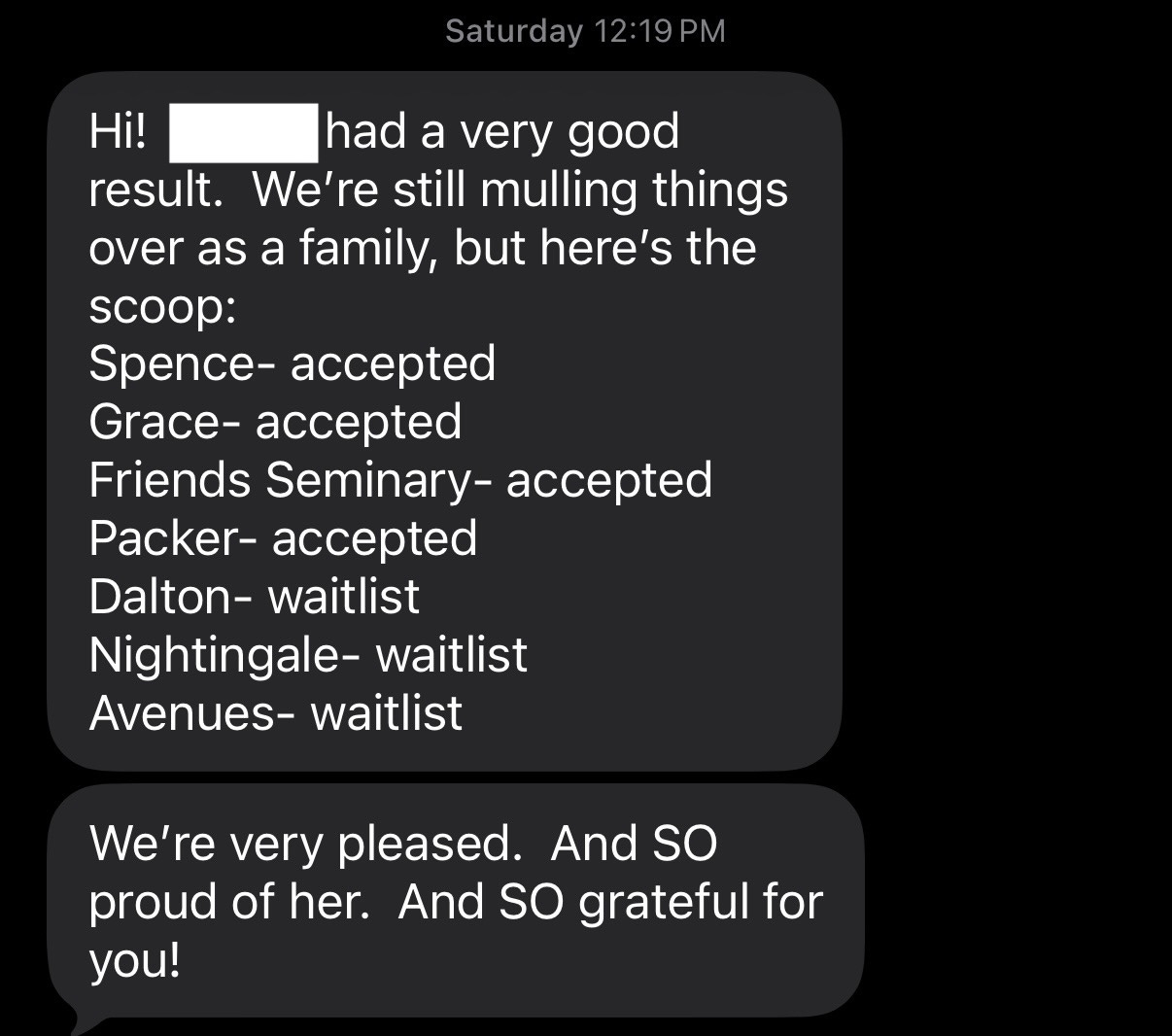
Different students, different tutors, different schools. Middle school results, then high school results, then phone calls with families trying to figure out what to do with real options in front of them. Which school, which fit, what actually makes sense for their kid.
One parent told me her daughter felt like getting in was “no big deal,” mostly because she’d gotten so confident along the way. That’s the goal. That’s what good prep looks like. Not a kid who barely scraped through, but a kid who walked in ready.
Another family is already talking about coming back for SATs with a wink emoji. We’ll be here.


Our tutors did this work. I built a team instead of trying to do it all myself because I knew this work required more than one person could give. It requires judgment, calibration, real relationships with families, and the ability to keep perspective when the process feels overwhelming. This season reminded me exactly why.
To our tutors: I am so proud of you.
To our families: thank you for trusting us with this one. We know what it costs in time, in money, in stress, in hope. We don’t take that lightly.
This piece first appeared on our Substack. Read it there or subscribe to get new essays on testing, admissions, and learning in your inbox.