Every fall, I get some version of the same call. A parent, smart, informed, already deep into the admissions process, has just sat down with their child to look at a practice test and is alarmed. “This is harder than anything she’s doing in school,” they tell me. “Is something wrong?”
Nothing is wrong. The test is doing exactly what it was designed to do.
The ISEE is not a test of what your child has been taught. It’s a test of how your child thinks. Most of the anxiety I see in ISEE families traces back to misunderstanding this, and in New York City, where the admissions timeline is compressed and the competition is real, that misunderstanding has consequences.
What the ISEE is actually measuring
The ISEE is used by most secular private schools and some religious schools for students applying to grades 2 through 12. It has four levels: Primary (grades 2-4), Lower (grades 5-6), Middle (grades 7-8), and Upper (grades 9-12). Beyond the Primary level, each includes five sections: Verbal Reasoning, Quantitative Reasoning, Reading Comprehension, Mathematics Achievement, and an unscored Essay.
Two of those sections have the word “Reasoning” in the name. There’s a reason for that.
Quantitative Reasoning is where families are most often caught off guard. There are two question types: word problems and Quantitative Comparisons. The word problems are designed so that many of them require little or no calculation. The emphasis is on reasoning, estimation, and logical thinking rather than executing procedures. Quantitative Comparisons, which appear at the Middle and Upper Levels, present two quantities and ask students to determine which is greater, whether they’re equal, or whether the relationship can’t be determined from the information given. The content spans numbers and operations, algebra, geometry, measurement, and data analysis.
Mathematics Achievement is different in character. This is the curriculum-based section, where students are expected to know the material and execute multi-step calculations. This is also where the above-grade-level design of the ISEE bites hardest. A sixth grader sitting for the Middle Level may encounter algebra and geometry concepts that won’t be formally taught until seventh or eighth grade. An eighth grader on the Upper Level will see material from courses they haven’t taken yet. Both sections are taken without a calculator.
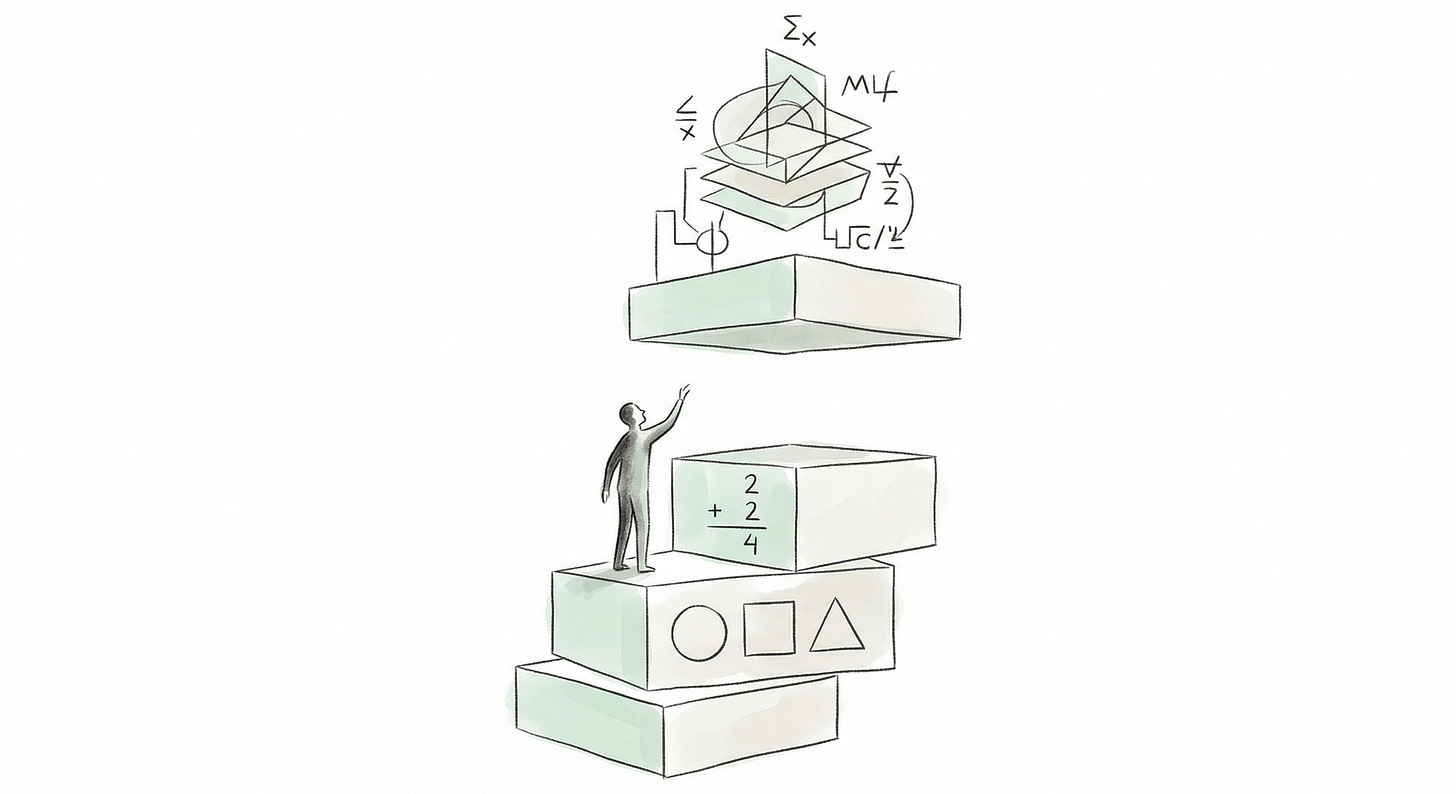
Students who are strong in school math sometimes struggle on the ISEE because of this combination: Math Achievement asks for content they may not have covered, and Quantitative Reasoning asks them to think in ways school math rarely demands. Those are two different problems, and good prep addresses both.
Reading Comprehension works similarly. The passages span fiction, history, science, and contemporary nonfiction, and students have to shift registers quickly, extracting meaning from texts they’ve never seen, on subjects they may know nothing about, under time pressure. Strong readers get an edge, but reading strategically matters just as much as reading widely.
Verbal Reasoning, synonyms and sentence completions, is where NYC families most consistently underestimate what preparation requires. The vocabulary is advanced, and you cannot acquire it in a few weeks. We have free ISEE vocabulary lists and workbooks on our resources page that we recommend well before formal prep begins, because this is the part that cannot be rushed. The students who do best on Verbal have been reading broadly and accumulating vocabulary for months, not cramming a word list the week before.
A note on the CTP, and why it doesn’t tell you what you think it does
Something that surprises almost every NYC family I work with: the CTP, the Comprehensive Testing Program, is made by ERB, the same organization that administers the ISEE. Many independent schools use the CTP as an annual in-school assessment, so families often arrive at ISEE prep with years of CTP data in hand, assuming those scores preview where their child will land.
They don’t.
The CTP is a curriculum-based achievement test. It measures what students have learned relative to grade-level expectations. The ISEE is a reasoning assessment that deliberately reaches above grade level and compares students to other students applying to independent schools, not to a curriculum benchmark. A student who scores in the 99th percentile on the CTP may find the Quantitative Reasoning section disorienting on a first encounter, because the CTP has never asked them to think that way. A student whose CTP scores look middling may have exactly the reasoning instincts the ISEE is designed to surface.
Don’t use CTP history to skip a diagnostic or set expectations before real ISEE practice has happened. A diagnostic under actual ISEE conditions is the only baseline worth trusting.
How students can take the ISEE
The ISEE is offered in three formats. In-person paper testing happens at designated test centers on set dates, good for students who prefer paper and want a structured environment outside the home. At-home digital testing offers more scheduling flexibility but requires a quiet room, a stable internet connection, and a student who can focus without the structure of a test center around them. Digital testing at a test center splits the difference: the supervision of in-person testing with an on-screen format.
None of these is inherently better. What matters is that your student is comfortable with the format and has practiced in it. A student who has prepared entirely on paper and encounters the digital interface for the first time on test day is at an unnecessary disadvantage.
One thing that catches families off guard every year: registration for fall and winter testing opens August 1st, and spots fill fast, especially for popular formats and test centers. Before August 1st, you should already know which format you want, your target date range, and which test center if you’re going in-person. Going in without a plan means losing preferred options to families who came prepared.
Many K-8 independent schools in New York also arrange in-school ISEE testing for their students. It’s convenient, but the school-scheduled date may not line up with where your child actually is in their preparation. If the timing doesn’t work, you can register independently and test on your own schedule. Coordinate with your school early enough that you have time to make that call deliberately.
The scoring system NYC families often misread
One of the first questions I get after a diagnostic is: “What does this score mean?” Right behind it, from families applying to the most selective schools in the city: “Don’t those schools want all 9s?” The short answer is no, and it’s worth understanding why.
The stanine scale runs 1 to 9. Stanines 1-3 are below average, 4-6 are average, and 7-9 are above average. Schools receive stanine scores alongside the underlying percentile ranks, which show how a student performed compared to others in the same grade who took the exam over the past three years. That norm group is not a random sample of children. It skews heavily toward students applying to private school, which means it’s already a competitive pool, and the stanine labels don’t fully communicate that.
The most selective NYC schools are not running a spreadsheet looking for rows of 9s. Admissions is holistic. The ISEE is one piece of a file that also includes transcripts, teacher recommendations, a student interview, writing samples, and whatever profile the school is trying to build that year. The kid who is an extraordinary musician, a genuinely original thinker, or the kind of student a teacher writes about in a way that makes an admissions officer actually stop reading gets looked at whole.
What I tell every family: your score won’t get you in, but you don’t want a score that can keep you out. Below a certain threshold, a number starts creating friction in an otherwise strong application. The admissions officer has to work to explain it away rather than just move forward. Get above that line. Once you’re there, chasing more points is probably not where your energy belongs.
Families often exhale when they hear this. The pressure that had been driving them toward over-testing, or toward treating ISEE prep as the centerpiece of an admissions strategy, starts to lift a little. If you want to see what the work actually produces, I wrote about this past February’s results.
here.
The NYC timeline is its own challenge
The independent school admissions calendar in New York runs on a compressed schedule that families from other markets consistently underestimate. Applications open in September. School visits and interviews happen through the fall. Decisions for most schools arrive in early to mid-February. Students need a completed ISEE score by early January at the latest, often earlier.

The ISEE can technically be taken up to three times per admissions cycle, but most NYC families have two realistic windows, and the second one is narrower than it looks.
The academic year is divided into three testing seasons: Fall (August through November), Winter (December through March), and Spring/Summer (April through July). The fall window is the one that matters most, and most families plan for an attempt before the end of November. The winter window exists as a backup, but December is largely gone to holidays and travel, and January is when application deadlines land. What remains is a narrow band of early-to-mid January dates, and if your family travels over winter break, which in the NYC independent school world is common, that band shrinks further.
Plan for two attempts. Execute the first one well. Treat the second as insurance, not a strategy. Families who enter fall testing underprepared and counting on a winter recovery often find the timeline doesn’t cooperate.
This is why I push families to start in the spring or early summer before the admissions cycle begins. A student applying in the fall of seventh grade should be starting in the spring of sixth grade. That gives time to take a diagnostic, find the real gaps, actually learn the material rather than just practice familiar content, and arrive at the fall test date with genuine preparation behind them.
The essay: unscored, but not invisible
The Essay doesn’t factor into the stanine or percentile. It is sent directly to the schools the student designates, and admissions teams read it.
It’s the one section where an admissions officer encounters the student’s own thinking, in their own words, organized under time pressure without any help. I’ve read enough teacher recommendations to know that admissions officers notice when the essay and the rec feel like they’re describing two different kids. Coherence matters.
I have students practice drafting under timed conditions, not to produce polished essays, but to get comfortable arriving at a structure quickly and following it through. The students who struggle most are the ones who write themselves into a corner in the first paragraph and spend the rest of the time trying to dig out.
If you’re interviewing ISEE tutors, ask these questions
Finding the right tutor matters more than finding any tutor. ISEE preparation is specific, and someone who is a strong general math teacher is not necessarily equipped to teach Quantitative Reasoning. If you’re interviewing, here’s what I’d want you to ask:
Where have your ISEE students been admitted? A tutor with real NYC market experience should be able to speak concretely about outcomes, specific schools and calibers, not vague gestures toward strong results. We share our admissions results publicly on our results page, because families deserve to evaluate that before they commit.
How do you run a diagnostic, and what do you do with the results? A diagnostic is only useful if it drives a targeted plan. Ask how they identify weaknesses and how that actually shapes what follows.
How do you teach Quantitative Reasoning specifically? This is the section most tutors teach least effectively, because it resists content delivery. It requires building reasoning instincts. A tutor who can describe their actual method here is telling you something real.
What’s your approach to vocabulary, and how early do you start it? A tutor who doesn’t address vocabulary until a few weeks before the test is leaving points on the table. Ask how they build it into a longer-term plan.
How do you build stamina and strategy into sessions, not just content? The ISEE is long and the time pressure is real. A tutor who only works through content without addressing pacing and decision-making is preparing students for a different test.
How do you communicate progress to families? Ask whether they provide written updates, track performance across practice tests, and flag concerns before the fall test date, not after.
What I tell families at the start of every ISEE engagement
Start with a diagnostic. Know where you actually are, and don’t let CTP scores substitute for that. The ISEE regularly humbles students who are strong in school, because school tests what’s been taught and the ISEE doesn’t. You need a real baseline before you can build a real plan.
Don’t wait for your child to indicate they’re ready. They rarely do. Start the vocabulary work before anything else. That’s the piece that needs the most runway and responds worst to cramming.
Use the “won’t get you in, but don’t want it to keep you out” framing to stay calibrated. Get above the line, then put your energy into the rest of the application.
If you have questions about your specific child, reach out. Where they are right now, what timeline makes sense, whether the ISEE or SSAT is the better fit for their school list, we’re happy to talk through all of it. We offer a complimentary consultation and you can find us here.
This piece first appeared on our Substack. Read it there or subscribe to get new essays on testing, admissions, and learning in your inbox.